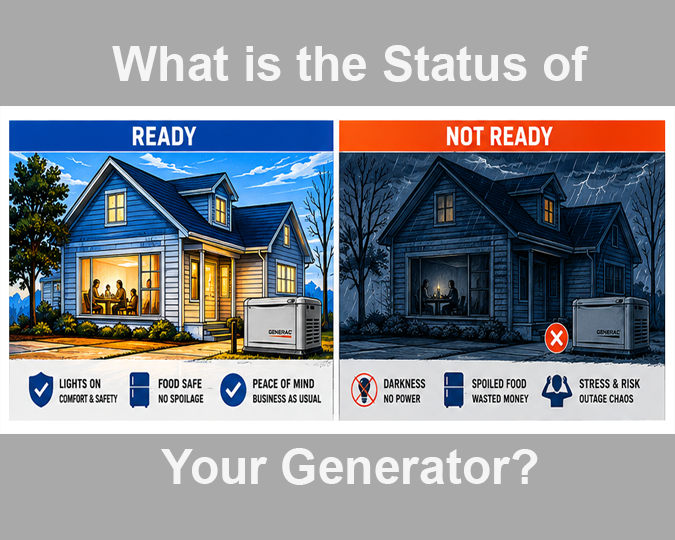
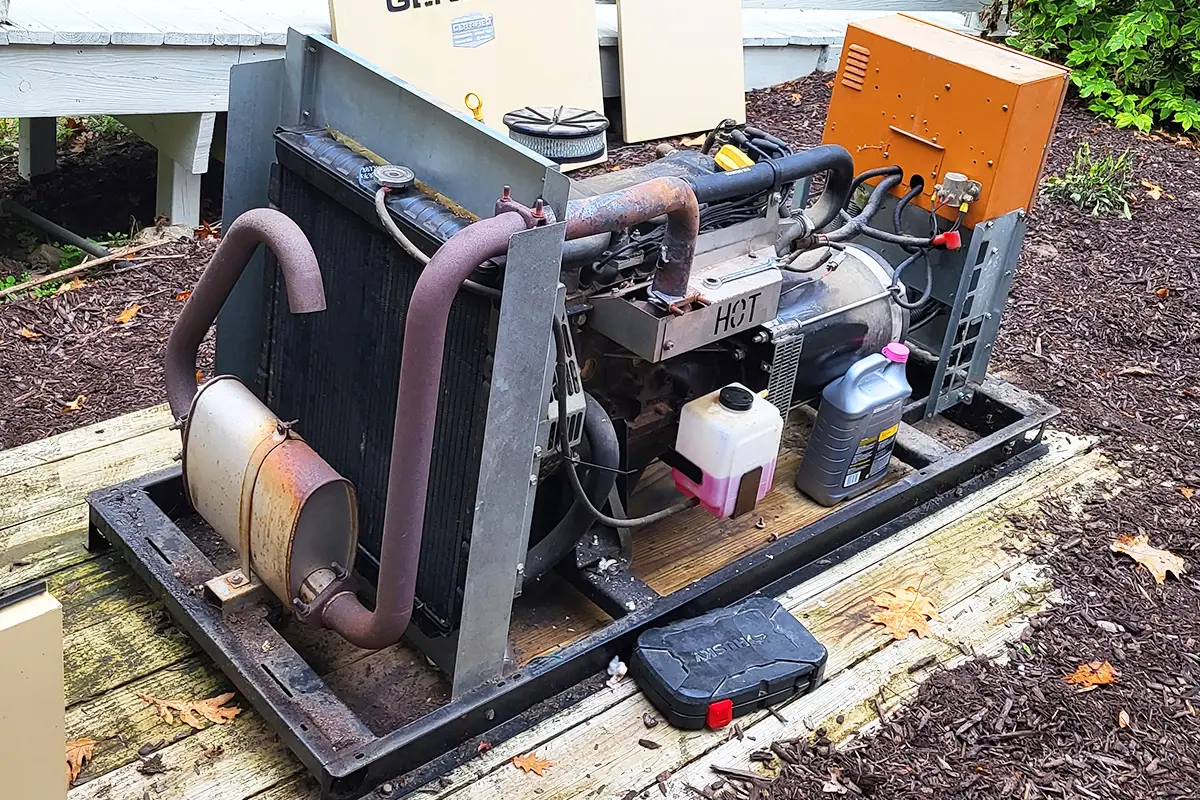
If you own a standby generator, there’s a good chance you’ve never actually seen it fail — because most generator failures don’t happen in a way you’d notice. They happen quietly, months before an outage, and only reveal themselves the moment you actually need the generator to work.
Here are the four most common reasons a standby generator doesn’t start when the power goes out.
1. A weak or dead battery. A generator’s starting battery works differently than a car battery. Instead of running continuously, it sits in a trickle-charge state for weeks or months at a time, then gets asked for a large burst of starting current all at once. That pattern shortens battery life in ways that aren’t always obvious. A battery can look fine, hold a charge at rest, and still fail to deliver enough current to start the engine under real conditions. This is the single most common reason a generator fails to start during an outage.
2. A transfer switch that doesn’t engage. The automatic transfer switch is what actually moves your home or business from utility power to generator power — and back — without you touching anything. A generator can start and run perfectly, and you’ll still have no power, because the switch never engaged. Corrosion, age, and simple mechanical wear are the usual culprits.
3. Fuel supply issues. Whether your unit runs on natural gas or propane, a fuel supply problem — a closed valve, a regulator issue, water or sediment in a diesel tank — can prevent a generator from running even if everything else is working correctly.
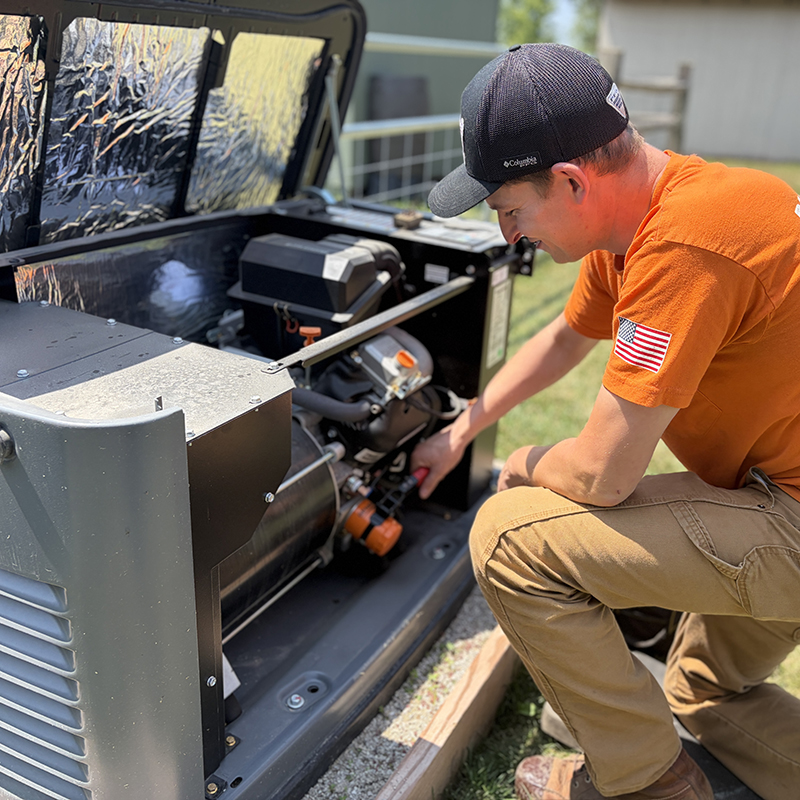
4. Skipped or inconsistent maintenance. All three of the issues above are things a routine inspection catches early — a battery load test, a transfer switch function test, a fuel system check. Most manufacturers build an automatic self-exercise cycle into the generator specifically to catch some of these issues on a schedule. But a self-test that completes doesn’t always mean everything is fine — it means the generator ran under light conditions, not necessarily under a real load during an actual power failure.
Why this matters more than it seems. A generator is unusual equipment: it sits idle for most of the year and is expected to perform flawlessly under real demand at the one moment it matters most. That combination — long idle periods followed by high-stakes performance — is exactly the profile of equipment that fails quietly rather than obviously. There’s no daily use to reveal a slowly weakening battery. There’s no regular load to reveal a sluggish transfer switch. The only way most owners find out something is wrong is during an actual outage, which is the worst possible time to discover it.
The good news: every one of these failure points is checkable, and every one is inexpensive to address on a scheduled visit compared to an emergency repair call during an outage. A battery load test, a transfer switch function test, and a fuel system check are standard parts of a routine maintenance visit — the kind of thing that turns an invisible risk into a five-minute fix.
If it’s been a while since your generator was inspected, or you’re not sure what condition it’s actually in, our free Generator Readiness Check takes about two minutes and tells you exactly where you stand — no obligation, and it works regardless of your generator’s brand or who installed it.