If you’ve never had a standby generator professionally serviced, it’s reasonable to wonder what actually happens during a maintenance visit. Here’s the full checklist — what should be covered every time, regardless of brand.
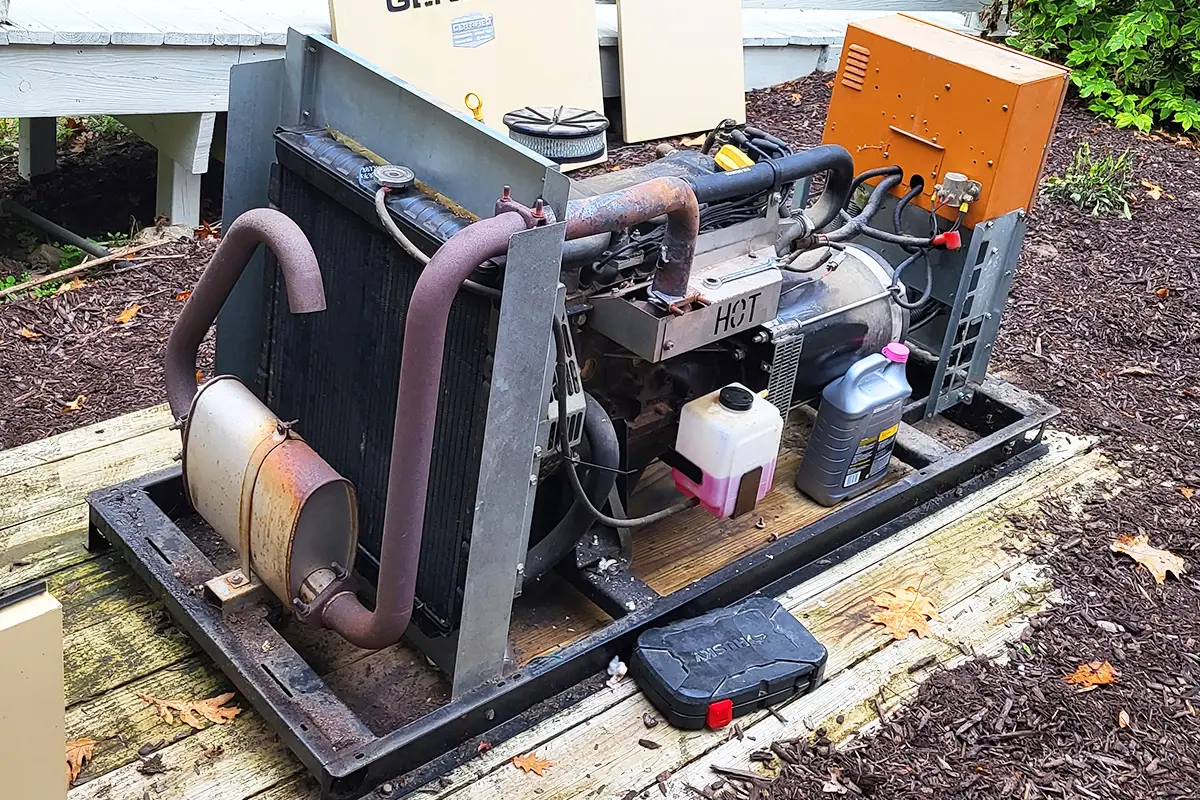
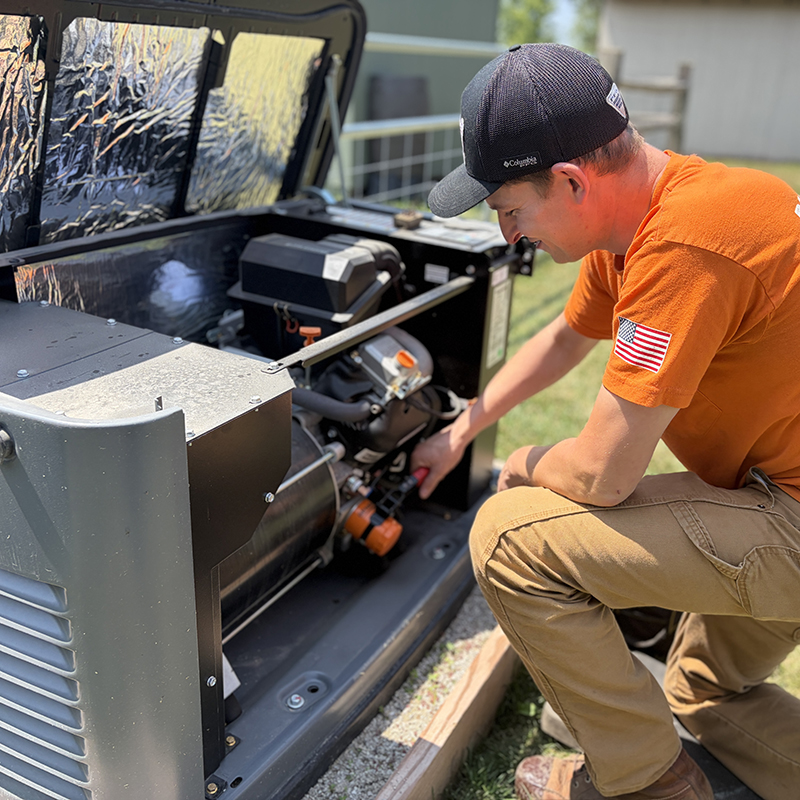
1. Full mechanical inspection. A visual check of the generator and its enclosure for corrosion, rodent damage, loose wiring, or physical wear — the kind of issues that are easy to miss unless someone is specifically looking for them.
2. Oil and filter service. Like any small engine, a generator’s oil breaks down over time even if the unit rarely runs. Old or low oil is a common cause of reduced performance and can shorten engine life significantly.
3. Battery load test and terminal cleaning. A battery can hold a charge at rest and still fail to deliver enough current to start the engine under real demand — which is why a proper test is a load test, not just a voltage check. Terminals are cleaned to prevent corrosion-related connection issues.
4. Transfer switch inspection and function test. The switch that actually moves you from utility power to generator power is tested to confirm it engages and disengages properly — not just that the generator itself runs.
5. Fuel system check. Depending on your unit, this covers the natural gas connection or the propane supply — checking for leaks, proper pressure, and (for diesel units) fuel quality and sediment.
6. Exercise-cycle log review. Most generators run a periodic self-test automatically. A technician reviews these logs rather than assuming a completed cycle means everything is fine — the logs can reveal patterns worth investigating even when no alarm was triggered.
7. Full run-time load test. The generator is run under an actual electrical load, not just an idle start — this is the closest simulation of what happens during a real outage, and it’s the step most likely to reveal a problem that a simple start-up test would miss.
8. Written service report. A proper maintenance visit ends with documentation — what was checked, what was found, photos where relevant, and any recommended follow-up work. This report also protects your manufacturer warranty, since missed maintenance intervals are one of the most common reasons a warranty claim gets denied.
How often should this happen? Most manufacturers recommend at least an annual visit; units under heavy use, in harsher conditions, or supporting a business often benefit from twice-yearly service.
What if something’s found during the visit? You should always get a clear, written recommendation and a separate quote before any repair work begins — a maintenance visit should never turn into a surprise invoice.
Not sure when your generator was last serviced, or whether it’s overdue? Our free Generator Readiness Check Readiness Check takes about two minutes and tells you where you stand.