There’s no single answer that applies to every generator, but there is a clear starting point — and a few Michigan-specific factors that push some owners toward more frequent service than others.
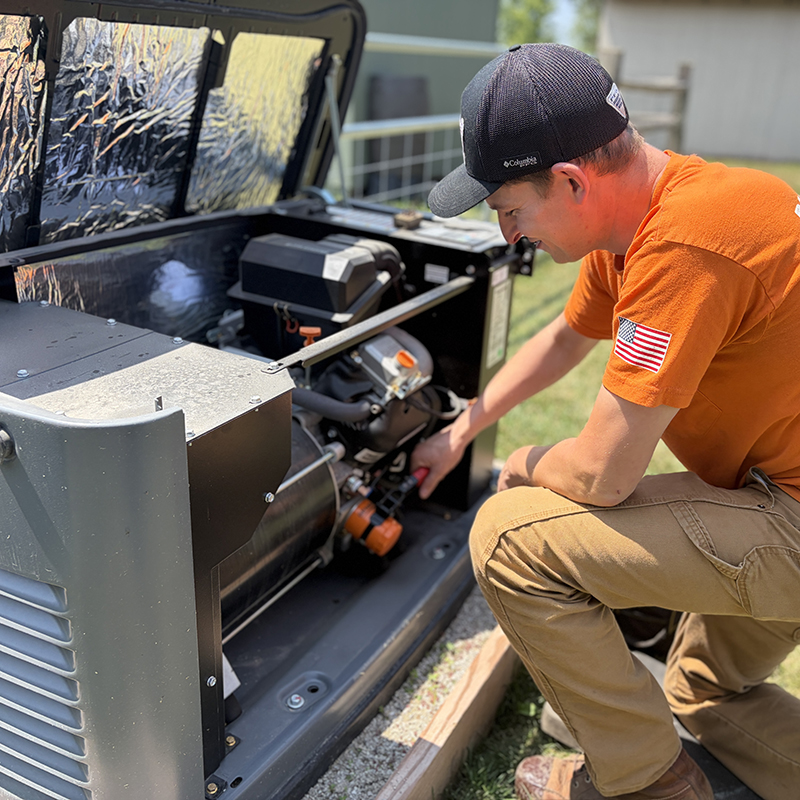
The baseline: at least once a year. Nearly every manufacturer recommends a minimum of one professional inspection annually, regardless of how often the unit actually runs. This covers a battery load test, transfer switch function test, oil and filter service, and a full run-time load test.
Why twice a year is common in Michigan. Michigan’s combination of severe summer storm activity and harsh winter cold puts more stress on a standby generator than a milder, more stable climate would. Summer storms are the leading cause of actual outages here, which means summer is exactly when a generator needs to be at its most reliable. Winter cold is particularly hard on batteries, the single most common point of generator failure. A bi-annual schedule — timed roughly to pre-storm-season (summer) and pre-winter (fall) — addresses both of these Michigan-specific stress points directly, rather than leaving one of them unchecked for most of the year.
Factors that push toward more frequent service:
- Commercial use. A generator supporting refrigeration, a fuel dispenser, or a point-of-sale system typically runs more hours and carries more critical load than a residential unit, and generally warrants more frequent inspection.
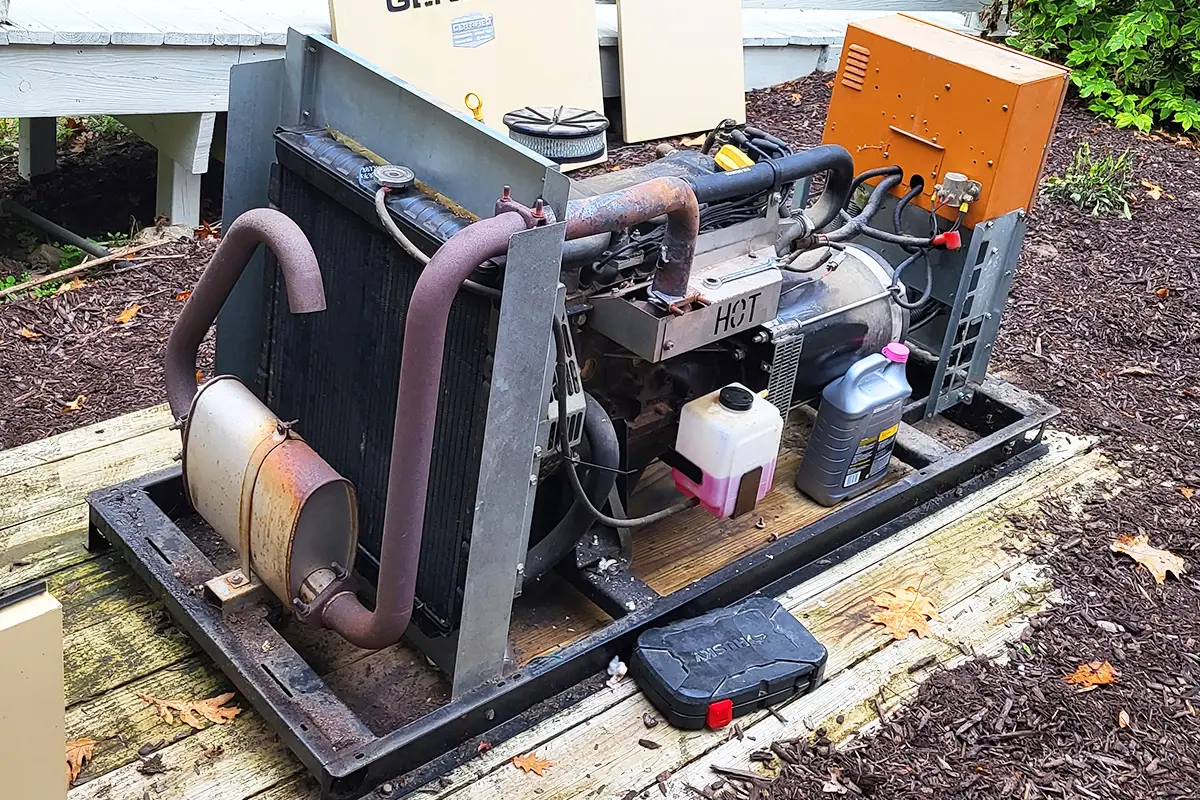
- Older units. Components age, and older generators — particularly those over 5–10 years old — tend to need closer attention to battery and transfer switch condition.
- A history of self-test failures or fault codes. If your generator has flagged an issue on its own exercise cycle recently, that’s a signal to service sooner rather than waiting for the next scheduled interval.
- No maintenance history at all. If you’re not sure when — or whether — your generator has ever been professionally serviced, that itself is a reason to schedule an inspection now rather than wait for an arbitrary date.
The real risk of under-servicing isn’t the schedule — it’s the discovery method. Whether you service annually or bi-annually, the goal is the same: catching a battery, transfer switch, or fuel supply issue during a scheduled, low-stakes visit instead of discovering it during an actual outage, when it becomes an emergency repair instead of a routine one.
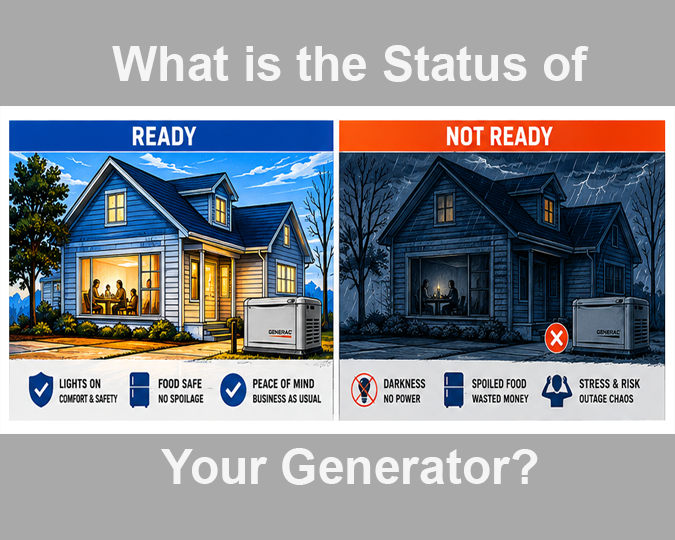
Not sure what interval makes sense for your specific generator? Our free Generator Readiness Check takes about two minutes, factors in your generator’s age and service history, and gives you a clear next step — or see our Maintenance Plans for annual and bi-annual options.